


Exhaust Backpressure Tester Kit

Accurately Diagnose Exhaust System Blockages
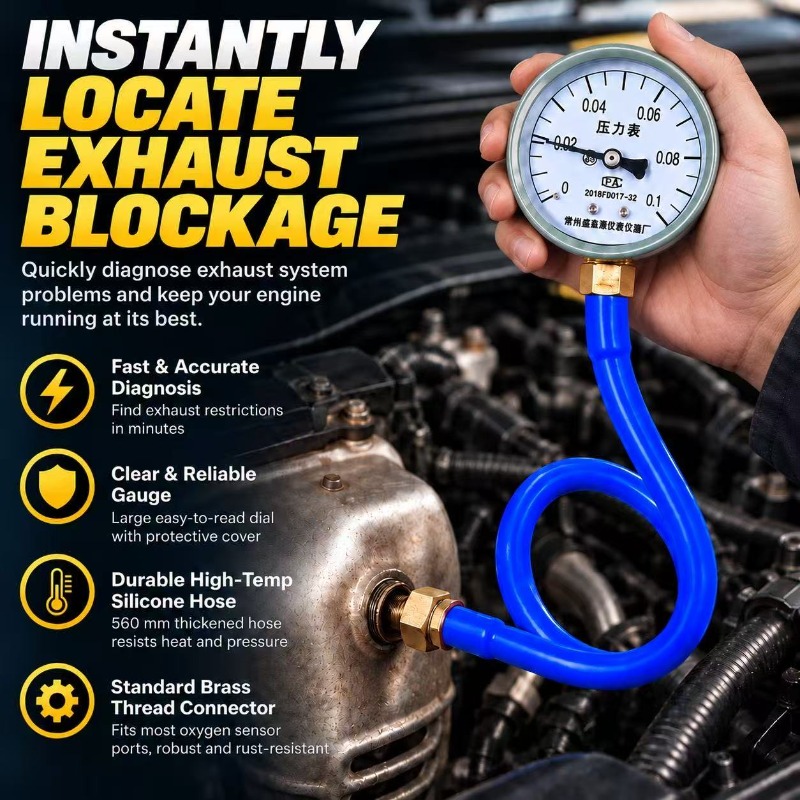
Identify restricted catalytic converters and exhaust pipe blockages within 10 minutes. Prevent sluggish engine performance, sluggish acceleration, and excessive heat buildup without dismantling the entire exhaust run.
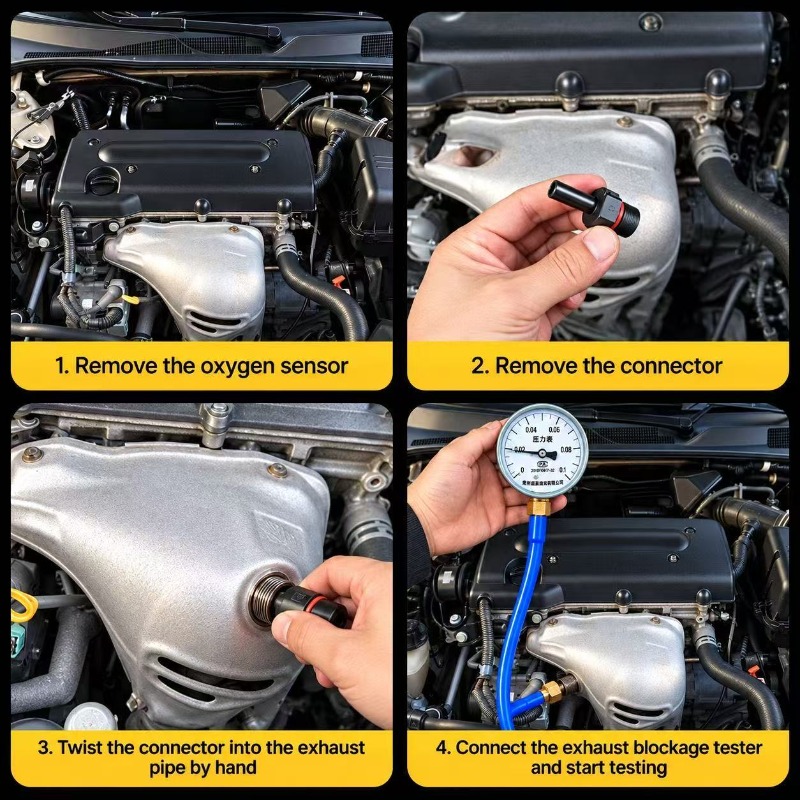
Simple Four-Step Testing Process
Designed for professional mechanics and DIY automotive enthusiasts alike. Simply remove the oxygen sensor, twist the brass connector into the manifold port by hand, connect the pressure tester hose, and start your engine to get direct backpressure readings instantly.
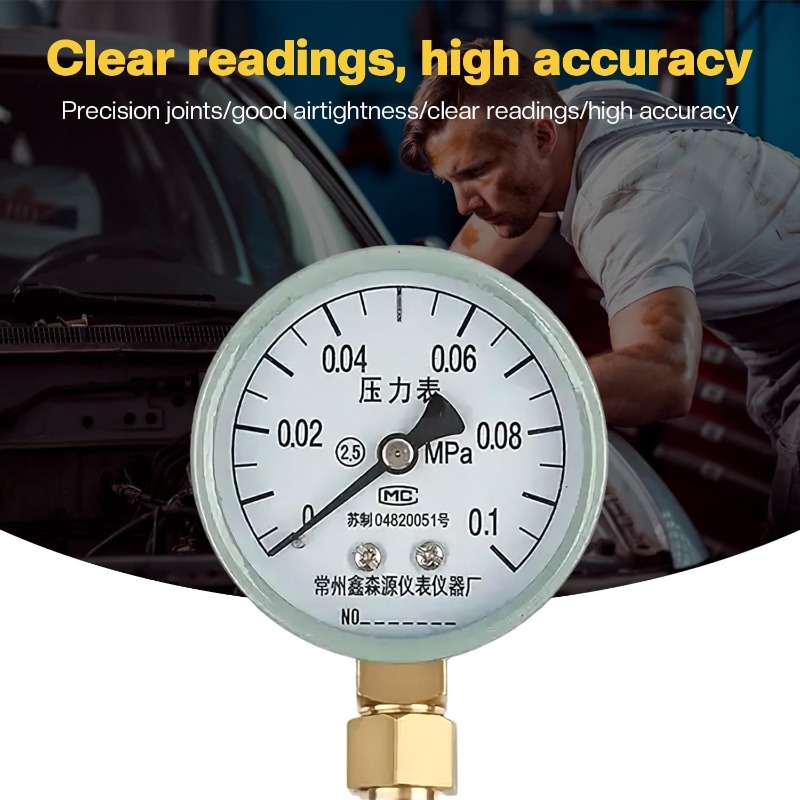
Highly Calibrated Diagnostics & Clear Values
Our backpressure tester gauge provides precise readings up to 0.1 MPa (or equivalent PSI/bar scales). Test your vehicle under standardized diagnostic conditions: backpressure should remain below 0.08 kg/cm² (1.25 PSI) at idle, and not exceed 0.15 kg/cm² (3 PSI) at 2500–3000 RPM.
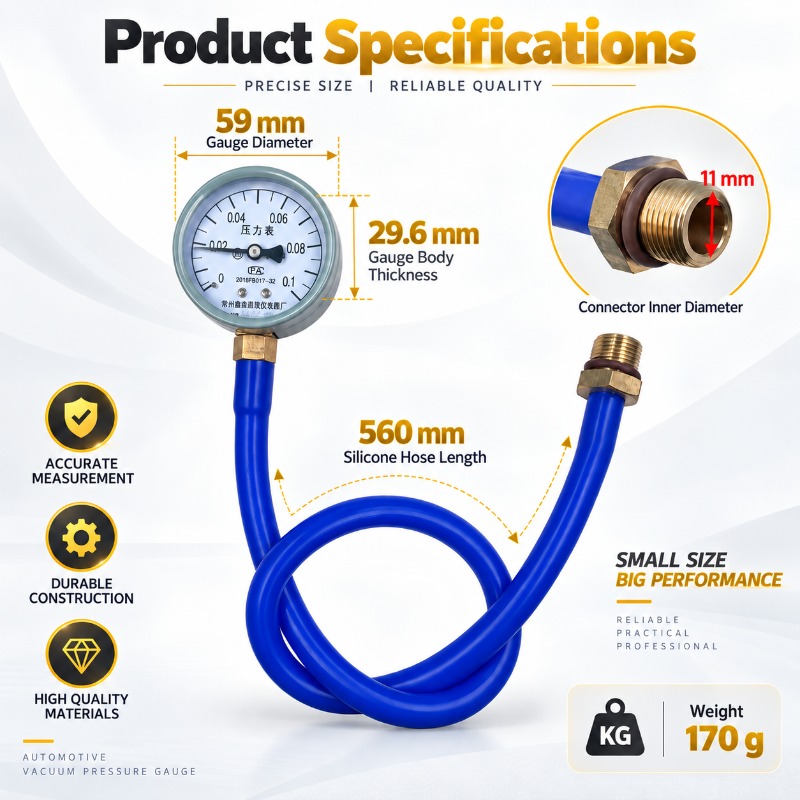
Explosion-Proof Thickened Silicone Hose
Engineered with a heavy-duty, thickened silicone hose that can be bent freely to navigate tight engine compartments. Resists extreme heat and prevents pressure leaks, keeping the technician safe while delivering highly stable gauge readings.
Product Specifications
| Hose Length | 560 mm (22.0 in) |
| Gauge Diameter | 59 mm (2.3 in) |
| Gauge Thickness | 29.6 mm (1.2 in) |
| Connector Inner Diameter | 11 mm (0.4 in) |
| Thread Adapters | M12 and M18 Threads |
| Weight | 170 g (6.0 oz) |
| Pressure Range | 0 to 0.1 MPa |
Frequently Asked Questions
Test the vehicle under two engine states: At idle, the pressure should not exceed 0.08 kg/cm² (1.25 PSI). When raising the engine speed to 2500–3000 RPM, the backpressure should not exceed 0.15 kg/cm² (3 PSI). Any readings higher than these values indicate a restriction or blockage in your exhaust system (such as a clogged catalytic converter).
Our gauges are carefully calibrated at the factory. However, vibrations during transit might cause the pointer to drift slightly. If this happens, you can easily disassemble the clear plastic cover, manually adjust the dial pointer back to the initial "0" position, and put the cover back on. This adjustment does not affect accuracy or subsequent test results.
The tester is designed to fit standard vehicle oxygen sensor ports. The connection assembly matches M12 and M18 threads, providing wide compatibility with the oxygen sensor ports of most mainstream passenger cars and motorcycles.